Labor Religion Coalition
Mexico Delegation
February 2002
From the beginning of time, those without power have been exploited by those in power. The peoples of Latin America are no exception to this rule. Today in Mexico, because of differences in power, exploitation is suffered by those who have left the Mexican countryside to work in "sweatshops" performing work sponsored by multinational corporations.
We recently had a chance to witness the effects of this exploitation as we participated in a delegation organized by the New York State Labor Religion Coalition.
Click Here For Our More Detailed Report

The Delegation
gathered for a group photo in front of Duro worker Carmen Julia’s home.
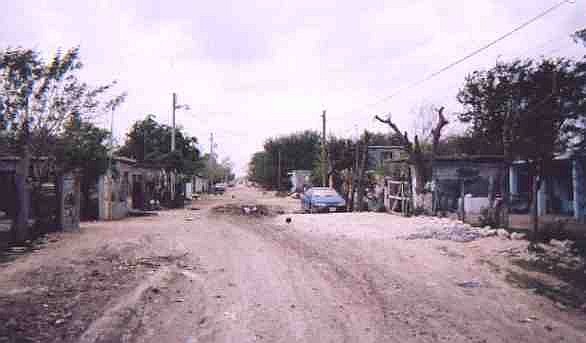
Typical view down a
street in Colonia Blanca near the home of former Delphi
Company worker Maria de la Luz. Maria developed cancer and was undergoing
chemotherapy
after working with solvents (toluene) at the plant until her health insurance
ran out after she could no longer work.
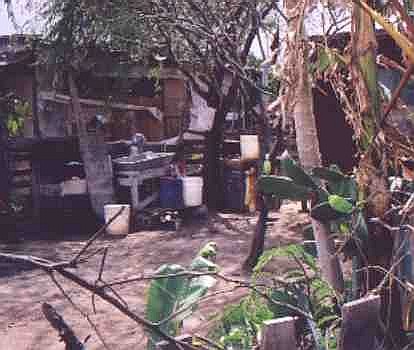
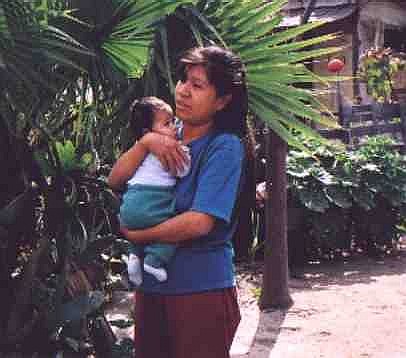
A view of kitchen facilities in a house in
Colonia Voluntad y Trabajo and a former Bonnco Company worker with her child.
Having lunch and meeting with workers organizing
through DODS (Derechos
Obreros y Democracia Sindical -- Worker Rights and Union Democracy) in
a restaurant near Reynosa. Among other activities, DODS attempts to assist
unemployed Delphi workers. (We are wearing caps with the insignia of the
United University Professions who
sponsored our trip.)
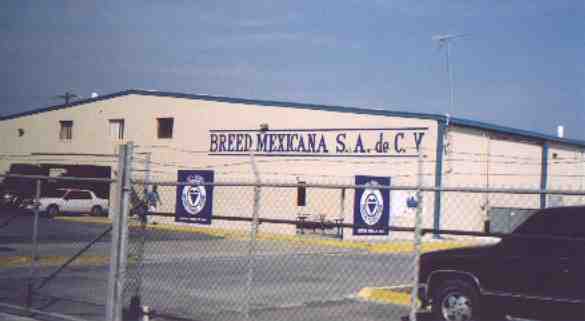
The Breed Company bought this former Auto Trim
plant. The square blue signs advertise this as an ISO
9000 plant. The plant makes steering wheel covers in a process which uses
various toxic chemicals. Workers are not provided with protective clothing nor
is there proper ventilation in the plant.
Workers are bussed from distant colonias to the maquiladoras in
company buses. These buses had been used by school districts in the U.S. until they became too
old for further use. Companies charge workers a
substantial fee for transportation.
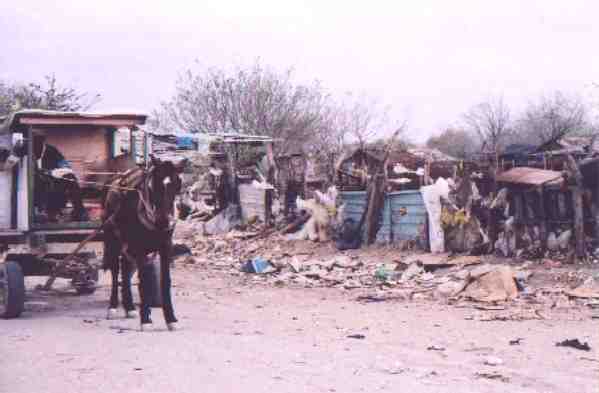
Some men work driving the donkey carts around the
colonias collecting garbage. Homes in the picture are along side a garbage dump.
This garbage dump is located
alongside a small lake adjacent to a colonia. A strong wind blew
the acrid smoke and dust into our faces making it
difficult to breath. Note the pig scrounging for food in the
foreground.
Street scene by the medical clinic (green building) in Colonia Derechos
Humanos. The children loved to have their pictures taken.
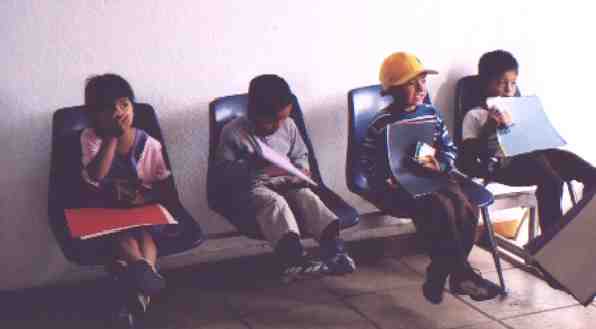
These children have just
been in for a basic check-up at the clinic in the Colonia Derechos Humanos. High school students on the delegation
passed out crayons and coloring paper to restore smiles after
the visit.
The children have
just finished a check-up at the medical
clinic in colonia Derechos Humanos. They are coloring in coloring books distributed by high school
students from the delegation and visiting with Sister Maria Teresa, one of the sponsors of the clinic.
Several homes across the
dirt street from the clinic in the Colonia Derechos Humanos. Note
wood shipping pallets used in building the homes.
The “area verde”, similar to
a town commons, in Colonia Derechos Humanos. It includes this
playground and soccer field. In the background
are school buildings and a communal building built by the
Rotary Club of Matamoros.
A drainage canal,
into which various toxic waste is dumped,
collects garbage as well. "Sedimentation Program Canal -- For the
health of your children, do not deposit garbage in the canal and pay attention that no one
does." The numerous white spots on the canal banks are various garbage.
A view down
the drainage canal which carries sewage and
chemicals from maquiladoras. Homes and businesses border both sides
of this canal.
A close up view
of the toxic garbage in the drainage canal. People needing
fill for their yards or for their dirt floors take soil from the polluted canal.
Visiting a school
sponsored by New York State United Teachers in
Colonia Juan Tamez.
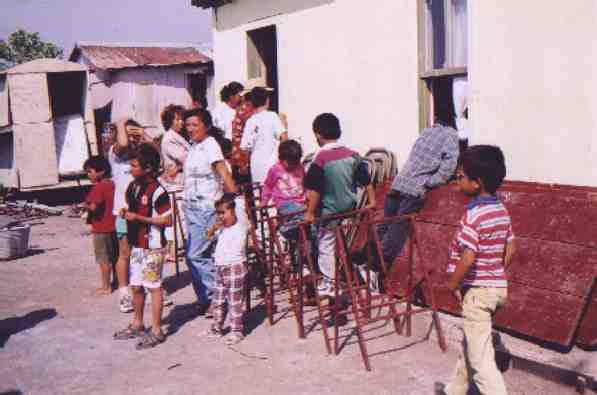
Children in one
of the colonias
are waiting to join the delegation for a lunch fiesta of gallo mole, a chicken
meal in a spicy chocolate sauce, which was prepared by workers for the
delegation's visit.
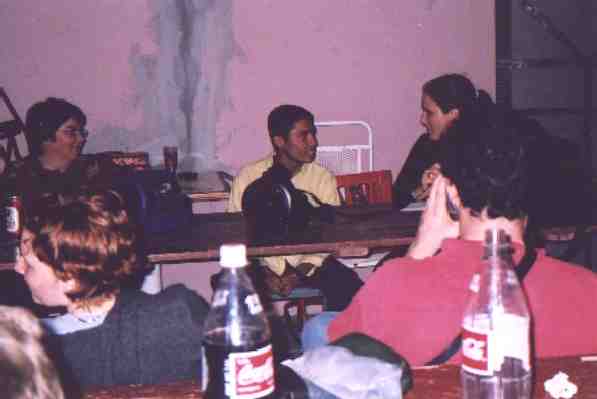
After a meal at a worker's house,
students and
workers spoke about their lives. One worker, Natividad, is talking about being
laid off from a
maquiladora job last year after the number of work
shifts was cut due to economic decline
in the U.S.
He now works at an even lesser paying job during the day and goes to high school
in the evening.
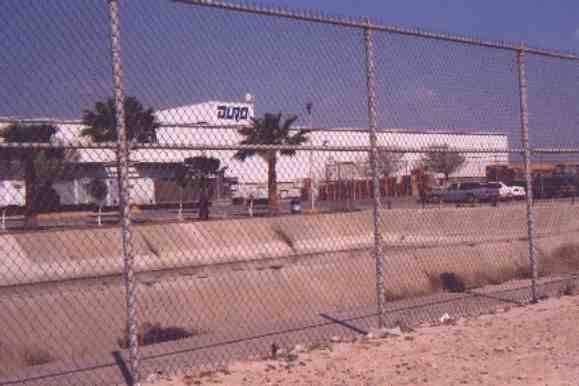
The Duro Company plant. Recently
a group of workers attempted to use the Mexican legal system to organize an
independent union in this plant. They were opposed by both the company
and the existing "ghost" union.
The Delegation meeting with
Margarita and Carmen Julia in Rio Bravo. Both women were dismissed
from the Duro plant after trying to
organize an independent union. They are now unemployed because they are
blacklisted by all the maquiladoras in the area.
Graffiti on a
wall in Colonia Americas near the Duro Company plant. "Vota por
un sindicato independiente" means vote for an independent union.
Another view of meeting with former Duro
Company workers
Carmen Julia and Margarita. These Duro workers,
who were leading the drive for an independent union, are blacklisted and will not
be employed by any of the maquiladoras in the area.
Will boycotts be
effective? There are differing opinions.
The delegation gathered
in front of former Duro worker Carmen Julia's home for a group photo with some of the workers from the Duro Company
on the last day of the visit.
Our Trip On This Delegation Was Sponsored By This page last modified on 11/06/07. STOP









&
NOTE
This page, all of its parts
(including Amite photo), and all linked
material residing on this web site
Copyright 1998 through 2005 Dr. Ray Guydosh
All Rights
Reserved By Copyright Holder
No Permission For Use Is Granted Nor Should Be Assumed
All Permissions and Authorizations Prior To December 31, 2002 Are Withdrawn